Spotlight Moment Award Winners – Q2
CONGRATULATIONS TO OUR SPOTLIGHT MOMENT AWARD WINNERS!
Workforce Solutions North Texas is investing $20,000 this year to directly support workers in the Child Care industry who demonstrate exceptional skills for quality child care.
Two infant to pre-K teachers are selected EACH QUARTER from across our 11 counties to receive a $250 award for demonstrating an exceptional understanding of the benefits of positive teacher-child interactions in the classroom.
30 additional teachers are selected EACH MONTH to receive a $50 award for actively demonstrating positive teacher-child interactions.

“After working in childcare for 26 years, I have learned that positive teacher-child relationships are one of the most important parts of a child’s development. Children learn best when they feel safe, loved, accepted, and supported. A warm and caring classroom environment helps children feel secure enough to learn, grow, and build confidence in themselves and others. When children feel like their teacher is genuinely excited to see them each day, they become excited to come to school and be part of the classroom. That feeling of connection helps children feel important, valued, and secure.
Every child comes from a different background and life experience. Some children come from stable homes, while others may be in foster care, come from abusive situations, or live in single-parent households. These experiences can affect the way children act, communicate, and respond to adults. Sometimes behaviors that seem negative are really a child’s way of coping with things they may not understand or know how to express. That is why it is so important for teachers to take the time to truly know each child individually. When teachers understand a child’s needs, personality, and struggles, they are better able to guide them with patience, understanding, and compassion instead of frustration.
I have personally seen how understanding a child’s background can completely change a situation. I once worked with a teacher who was struggling with student whose behavior had created a very negative environment in the classroom. The child was often disruptive, emotional, and difficult to redirect. After learning more about his home life and personal struggles, the teacher gained a different perspective and realized the child needed support and understanding more than punishment. She changed her approach and teaching strategies by focusing more on encouragement, patience, and building trust with him. Slowly, things began to improve. The student became more cooperative, confident, and happier at school.
What made the situation even more meaningful was that the student’s mother had once attended our center herself. Over the years, I have seen firsthand how meaningful positive teacher-child relationships become. Many children we have poured into still come back to visit us just to say hello. Some have returned through school work programs to work alongside us because of the positive memories they experienced growing up. Others have become parents themselves and now bring their own children back to our center because they remember the love, support, and care they received when they were young.
Positive teacher-child interactions do more than help children academically. They feed children socially, emotionally, physically, and spiritually. As teachers, we do so much more than teach letters, numbers, and routines. We help shape childhood memories that children carry with them for the rest of their lives. The love, patience, and encouragement we show today may continue to impact children and families for generations to come.”
– Deanna Yetter, Little World Learning Center in Burkburnett, TX
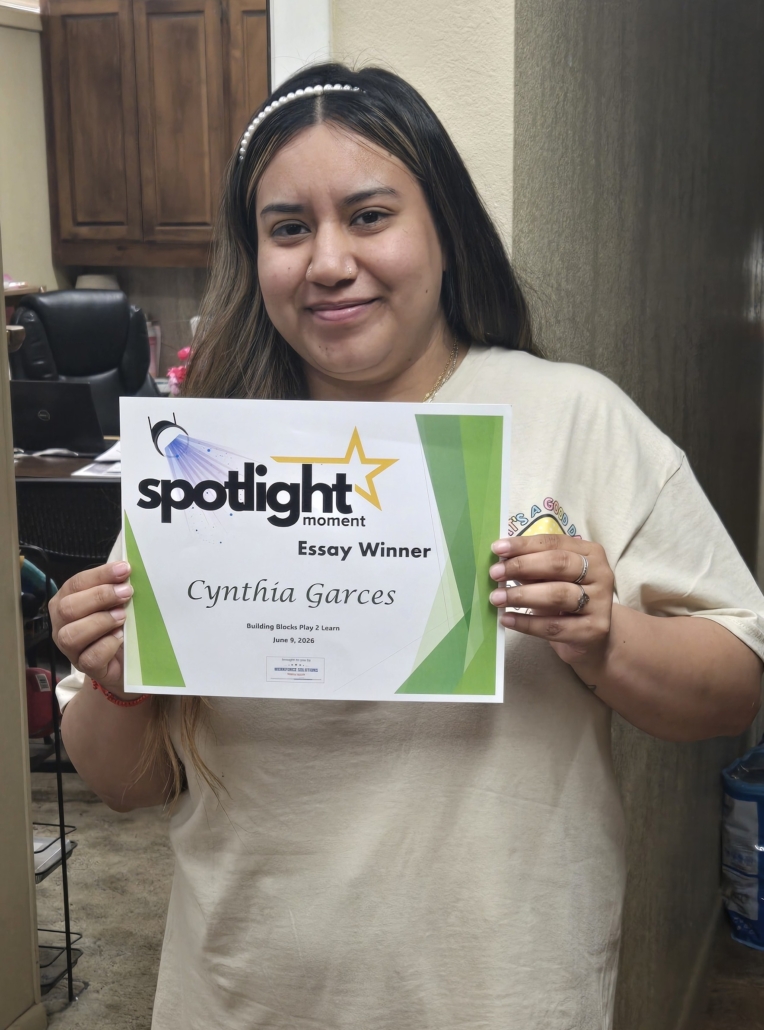
“Positive teacher-child interactions, especially in early childhood education, are vital because they are what provide children with nurturing relationships, as well as a safe, supportive environment to grow, learn, and thrive in. Because some children start with us caregivers at very young ages, these interactions can also mean that quality care is represented in allowing students to have the ability to explore and grow while at the same time building the proper foundation to set them up for success as their education proceeds through the years. Children should have the opportunity of integrating cognitive, emotional, social, interpersonal skills and self-regulatory competencies in order to be well prepared for more challenging academic content and learning experiences. We are a big part of their childhood, and the more we use positive interactions, the higher the probability that children will be developmentally aware, which in turn enables them to blossom in kindhearted environments.
The most important quality that a teacher can have is to simply be caring. It’s a broad word in which many other meanings and qualities can fit into (attentive, empathetic, curious, supportive, etc.), making it just the right fit. When a teacher is caring, they naturally integrate their “magic” when around children. As teachers create amazing relationships with the children, it then leads to building those same, strong and healthy relationships with families. Active participation of families in an early childhood program is important because children receive their foundation for morals and ethics from their families. Also, it gives the opportunity to celebrate/acknowledge differences if there are any. Families should always feel included in the students’ education progress, and working together ensures student success. Collaboration in general is a necessity in education, whether it be with kids, mentors, colleagues, or parents. This way, we work as a team to ensure necessary resources are at hand when needed.
Aside from loving children in general, teachers want to be part of the change. We take pride in being that person that continuously provides children with the necessary building blocks to ensure a secure knowledge foundation and eventually lead all children to know what a loving childhood entails. Promoting positive academic success through interactions impacts children more than we may think, and even the little gestures can make such a huge difference!”
– Cynthia Garces, Building Blocks Play 2 Learn in Wichita Falls, TX